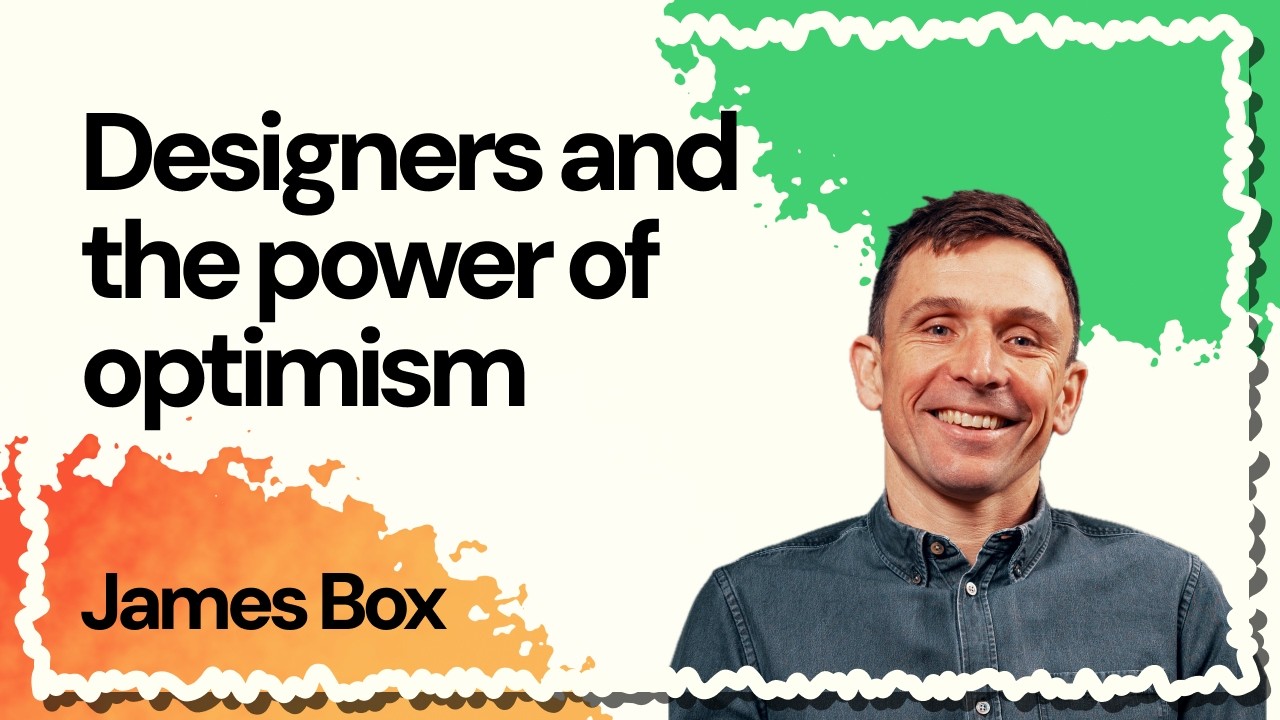
"What would it take for design to have its vinyl moment — and reclaim its power beyond JIRA tickets and design systems?"
*
Summary
*
In this episode, I sat down with James Box, designer, author, and co-founder of Burst – to talk about the changing shape of design careers, the realities of agency vs. product team life, and why so many designers feel trapped in "mechanistic" delivery work. James reflects on his years at ClearLeft, the culture of autonomy and learning that shaped his practice, and the role of communication and uncertainty in good design. We explore Burst's work with startups and scale-ups, including experiments with equity-based engagements, and discuss how innovation can get dampened as companies grow. The conversation turned to AI: how it's collapsing the gap between insight and delivery, what "AI-native" products feel like, and why designers need to hold both optimism and skepticism at once. James closed with a hopeful challenge, for designers to embrace entrepreneurship, use new tools to tackle bigger problems, and help design rediscover what it's uniquely good at.
*
Guest
*
James Box
Berst
LinkedIN
Website
*
Host
*
Danny Hearn
LinkedIN
Website – www.dannyhearn.me
Podcast – www.deeplyhumandesign.com
(00:00) James Box
I struggled to see what the path for a design, a young designer coming out of design school now is to a point where they are actually, ⁓ doing things more meaningfully than picking up JIRA tickets from a product manager who’s prioritized those based on a bunch of business metrics. and they’re delivering those, those solutions with a, with a
(00:04) Danny
Yeah.
(00:25) James Box
design system that has been optimized by a team millions of miles away. That to me does not feel like an exciting career and I worry about design in that way.
(00:44) Danny
James Box. Hello. It’s so good to have you. Thanks for coming. You were on my names of people that I wanted to talk to quite a while, actually, because we know each other little bit. And you may not realise, but you have actually played a bit of a role in my own practice and my own thinking over the years. And I’ve reflected on some of the times we’ve worked together. So I’m…
(00:46) James Box
Bye, Lisa.
(01:12) Danny
I’m really glad that you’re here and perhaps we can talk about that. But I’m thinking, what’s that?
(01:15) James Box
Okay, yeah, definitely if it’s a positive thing.
Definitely if that’s a positive thing, I’m up for that.
(01:21) Danny
It’s definitely
positive, promise. Yeah, absolutely. And I wonder for people that aren’t as familiar, would you be able to perhaps just describe a little bit of your journey, a little bit of your grounding so people can kind of get a sense of who you are, certainly in the professional sense?
(01:36) James Box
Yeah, yeah. Well, thanks for asking me to do this, Danny, as well. It’s very kind. So I’m James Box. I’m a designer. I think a designer who’s ended up being a bit of an entrepreneur, maybe, or certainly interested in entrepreneurship. I’ve also written a book along the way about user experience design a few years ago.
My career has really been agency based. So I’ve spent the last six, seven years working ⁓ at a studio that I co-founded with my colleague, also called James, called Berst. ⁓ Loosely speaking, Berst is really focused on early stage innovation. So we work with a lot of startups and we work with some corporates who are trying to act like startups.
And prior to that, I was also in an agency. worked for ClearLeft, which is where you and I worked together, ⁓ John Lewis. And I was there for 10 years. Really, most of the time there, I was the director of ⁓ user experience design. But joined the company as I think their first employee. So.
Um, spent over 10 years there and, saw lots of changes throughout that period. Um, you know, coming when I first joined, were sort of web standards based company and then very focused on user experience design. then towards the sort of latter stages of my time, they’re very much involved in sort of design leadership. Um, so I’ve always been agency and I don’t really have a vertical as such. It’s really across lots of different industries. I’d say my, my sort of.
particular niches like the, similar to you, guess, the sort of early stage of a project or an initiative, setting strategy, research, discovery, ⁓ bit of facilitation, bit of leadership. Yeah.
(03:44) Danny
They call that T-shaped, don’t they, these days?
(03:48) James Box
Yeah, I’ll take that. Yeah, T-shaped sounds good. Yeah.
(03:52) Danny
That’s what somebody said to me and then then I thought, it’s like generalist, isn’t it? It’s someone that can kind of do a little bit of everything, but not that well, but but well enough to be able to kind of maneuver around a lot of different spaces. I think that’s how I’d I’d understood it.
(04:07) James Box
Yeah, yeah, I think the way I remember T shape was, you know, you have a breadth to what you do and then potentially there’s one slice that you go deep on. That being the kind of the bar. I think if I had to put my sort of my depth part, it would be really around trying to understand. I mean, this is a bit of a cliche, but what’s the problem we’re solving? Why are we here?
(04:17) Danny
Deep one, yeah.
Yeah.
(04:36) James Box
Yeah, who we’re doing this for and, you know,
(04:36) Danny
Yeah. Yeah.
(04:38) James Box
defining that in as clear a possible way as needed so that everyone around us can understand it. And it sounds such a basic thing, but I think it’s weirdly overlooked by so many teams. understand the I think so, yeah. I mean, yeah.
(04:51) Danny
Even now. Even now.
I think, you know, that was the thing that I found quite compelling when we first started interacting was that I could see that you had a deep developed practice and, you know, like a real toolkit. And it was something that I hadn’t really come across. Like, believe it or not, I mean, when when we met, I guess I was probably about
maybe 10 years in and stuff. And I had just largely been in a lot of enterprises. And I was thinking about this, how, because you said that you come from quite consultancy background. And I think consultancy, my sense is that it forces you to have a practice because you’re constantly going into different situations all the time. Whereas enterprise, my experience was sort of like, well, look, you know, we’ve got the requirement, you know, this is going back.
know, quite a way. It’s like you’re in a team, you got the requirements, your job is to make the wireframes, you know, this going back a bit, you know, and, and, and you have to follow the what the what the PM tells you, you know, and so the space for practice in there was actually kind of like, you sort of had one, but you didn’t call it names, you know, in those days, most people weren’t reading like, new x books, I never saw any on any shelves, you know, it just wasn’t really a thing. And when I first met you, I was just kind of like,
(05:56) James Box
Yeah.
(06:18) Danny
Whoa, it’s like every time there’s a problem, you had this sort of like reasoning and then like, well, let’s try this model. Let’s try that. And it was just like, what is this? This is really interesting. And I just, I’m guessing that that’s from your consultancy experience that you cultivated that.
(06:36) James Box
Yeah, I mean, it’s a nice thing for you to say. I’m not sure I felt the same way when I was talking to you, but I mean, certainly I would say, you know, one of the advantages of being a consultant is, well, two advantages, I’d say firstly, it’s the breadth, like as you’ve said, you know, you’re solving different problems on a regular basis. And you have to be pretty adaptive and pretty versatile and pretty open to learning all the time. So
The second thing for me was that there’s a lot more emphasis on communication. we were hired, you were my client, so you were hiring us to come and help you in some form. And irrespective of the quality of the work we were doing, the…
the precision and the detail in which we were able to communicate was going to be really important. And I think you have to be able to do that in an agency. So yeah, I think that really helps. It’s interesting because as you were saying that I realized that I think we may be in a similar situation today because not so much that not so much that people are in enterprises in the same way, but I think
There’s a lot of people who have spent a lot of designers now come into the industry, go straight into a product team, a large product team. And they spend a lot of time working in a very sort of, you know, tightly defined area could even be a feature team, right? You know, where you’re working on a specific thing.
(08:12) Danny
Yeah.
(08:14) James Box
picking up JIRA tickets every day. And I think it’s quite hard, you you become very sort of focused on that problem and you know that problem intimately, but to get that sort of bigger picture side of things.
(08:25) Danny
isn’t
that like they get very good at converging and their world and life is in convergence as opposed to spending time in divergence of thinking like, we even solving the right problem? What does everybody understand? Like those types of behaviors and models are not necessarily things that they’re tasked to do. It’s like much more like coming inwards. That’s how I hear that.
(08:50) James Box
Yeah, I mean, I think so. I they’re I would guess, diverging within that very narrow lane, right? How can we adjust this button? no, that’s disservice. But no, I think that’s right. It does concern me, if I’m honest. I wonder what the path for a designer coming out of design school is now. ⁓ I think years gone by, it used to be, you know,
(08:56) Danny
Yeah, a tiny diamond.
Hmm
(09:18) James Box
a common path was to go into agency and you would get this experience. I don’t think the agency model really exists at the same scale anymore. And I don’t think that path is realistic. And if I’m honest, think, you know, the better kind of financially, the better route for people now is to go into a big, you know, well funded.
product company. So yeah, I worry about that. yeah, I think people are perhaps not getting the breadth that, you know, I got from agency and you got after you moved on as well.
(09:40) Danny
What? I mean you…
Well, you I mean, you had quite a quite a kind of unique experience. know, ClearLeft, you know, I, I’m a huge fan, fanboy. And I just made it to Andy recently. And, know, for those that don’t know, you know, I mean, how would you characterize ClearLeft for perhaps the, the youth that perhaps might not be as familiar with it sort of entry into the into the UK scene? Like, how would you describe it?
(10:18) James Box
⁓ Yeah, I so I suppose you hinted at it earlier on when I started working at Clearleft, would have been, ⁓ crikey, that would have been mid 2000s. ⁓ User experience design didn’t, didn’t really, there certainly wasn’t an industry, you know, there was perhaps a few people that called themselves user experience designers. ⁓
you know, prior to that you were, I don’t know, usability professional or ⁓ something along those lines. And then I think, so the founders at ClearLeft recognized that, you know, what was happening with people like Adaptive Path in America, and that potentially, you know, there was a rising tide around this discipline of user experience design. And so the agency was really…
formed around that those ideas that underpinned that kind of user experience movement. And they built up quite a reputation for working with businesses who were interested in that mindset. You know, I think they caught the wave at the right time and ClearLeft had this sort of dual aspect to it. Well, actually three really. So firstly, there was the client services, know, like the time
(11:32) Danny
Yeah.
(11:42) James Box
the projects that we did together. There was also an events business. So, you know, part of the organization was to try and build bigger communities around this stuff. So, ClearLeft put together events like UX London, which is still running, leading design. There was a conference called Deconstruct, which is a bit more kind I don’t know if you ever went to that one, Danny, but that was a little bit more kind of, a bit more eclectic, shall we say.
(12:11) Danny
Yeah. Yeah.
(12:12) James Box
They had this, they had this business that was, you know, part events, part client services. And there was also a little bit of a product business as well, because ClearLeft developed a few products along the way. was a usability testing tool called Silverback and it did, yeah. Yeah. Yeah. Yeah. So, so, so really, I think it was, it was an agency that was quite pioneering for its time. There was.
(12:25) Danny
It had the gorilla on it, didn’t it? Yeah, yeah.
Yeah.
(12:39) James Box
As a result, it drew people who had a shared interest in this discipline towards it. Uh, and that would be clients like yourself, but it would also be practitioners. so, you know, for me, it was great. got to work with some absolutely brilliant people. Um, and I know Andy and Rich and Jeremy, who were the founders, they will often get the credit, but you know, some of the practitioners and I worked with someone I still work with today and they’re just, you know, phenomenally talented people who, um,
Yeah, who have a really strong and opinionated and rigorous approach to their work. ⁓ So yeah. Right. Yeah, yeah, think so.
(13:18) Danny
Yeah, I’ve experienced that. It’s quite intense. was quite intense. I noticed the
speed difference between being in an enterprise and then myself actually going to work in Clearleft for a little bit. And it was just like, you know, the jet engine, was, you know, I’d said to Andy earlier, you know, it’s like, just come in. Very, very slow start, gentle, lots of chats, you know, let’s let’s align, let’s talk about all the angles and then head down.
you know, and it was very, very quick. And it was sort of like the sort of hyper lean, you know, every day was was slightly unstructured and unplanned, but the plan would be formed in the morning, and then hyper alignment between the group I’m in. And we just like, very, very quickly and effectively. I’ve never experienced that before, really, you know, ⁓ compared to sort of Monday morning meetings, and it’s just a completely different pace.
(14:12) James Box
Yeah, yeah.
(14:14) Danny
What was it like for you in that, you know, that very early days? and what I presume, you know, said employee number one, so you’re sort of working alongside Jeremy and Andy and, and Rich, like, what was could you describe that? Like, were you kind of nervous? Did you feel unsure? How do you did you feel confident in your practice? where were you in?
(14:38) James Box
I mean, I think there was a lot of improvisation going on, I’m honest. Yeah, I mean, I think I felt, but all of the things that you described in different measures at different points, you know, there was an element of intimidation that there was this sort of reputation of these people that I was working with.
(14:41) Danny
Yeah, which is a skill in itself.
Yeah.
(15:02) James Box
all of whom were sort of very good communicators. They all had sort of quite well regarded sort of blogs. And so I knew a lot about them when I went into the room. know, it wasn’t like I was starting a new job and meeting these people for the first time. I had some sort of context. And I think that that had a little bit of an intimidation factor to it. But right from the start, I think there was always a
sense of common, I guess, purpose around what we were trying to do. And going back to your point about it moving fast, I think there was this, we talked a lot about giving people the autonomy to do the work that they can do best. so removing some of maybe the structures that you talked about in some of the larger organisations was quite intentional.
And so you would have this freedom which came with this sort of like, you know, I guess two sides to it. Firstly, the side of fear and ⁓ perhaps, you know, a little bit of uncertainty of whether I am good enough to be in this role.
(16:14) Danny
Really?
(16:14) James Box
⁓ But also
excitement in that, you you’ve come to this place to do good work and you’ve been given some opportunities to work on some really high profile, some high profile jobs. And at the same time, you know, we had this culture of learning around us. the events were almost really for us to learn as much as everyone else. And yeah, so I think there was two sides to it. And I just really enjoyed that energy, to be honest.
(16:35) Danny
Ha
Yeah, I noticed that when when I was there how going for lunch was like, we didn’t talk about what was on TV. There was these sort of, you know, this, Jeremy would come down and there’d be a couple of other characters and, and conversations would just suddenly start forming and it wouldn’t it would never be like generally like, let’s talk about, know, like UX, it would usually be about some, something, maybe something connected to design more broadly, but
But someone had read a load of books and it would get quite philosophical. And it was sort of this avant garde of design discussion, which is just utterly alien to me, coming back to the enterprise comparison. Nobody was talking like that. And so for me, fish out of water in that scene, it was just like, what’s happening? And I think it’s that culture that you’re describing that.
that perhaps I witnessed a little bit of. Yeah, it sounds like it was, you so go on.
(17:43) James Box
Well, next.
No, it’s interesting to hear it from your side as well, because obviously you’ve sat on, you’ve been inside the organization as someone who worked there and also as a client as well. And it’s just interesting to hear those observations, because I feel like everyone probably knew that, but it became so normalized that we were having these discussions that, you know, I kind of just thought everyone does this, you know.
(17:53) Danny
Yeah, both sides.
Yeah, yeah.
(18:09) James Box
There was a culture of this kind of brown bag lunch thing, was, you know, say if people had something to share, they would come in and it could be very, I mean, you may have even given a brown bag lunch yourself to any other, but yeah. And so there was, there was an element of, yeah, just sharing to that. was quite informal, but yeah, I guess it had a bit of performance to it as well. You it was, you it was, you were almost rehearsing a talk for a bigger audience. So.
(18:12) Danny
Yeah. ⁓
I think I did, yeah, once, yeah.
(18:38) James Box
It could be a bit intimidating, I think. ⁓ yeah, mean, overall, I look back very fondly on my time there. I think, you know, we got to work on some brilliant projects with such sort of, you know, such a range of clients. So I was very lucky to be able to do that despite the despite questioning myself on a regular basis.
(19:01) Danny
Yeah, that’s interesting.
You say that like I keep hearing that like, you know, that to the outsider, you know, there’s the the director of UX at ClearLeft, know, vetted and, and, know, repeated projects and all this and yet, the experience for you as a human and a person is having some of those feelings of, of anxiety or like not quite believing in yourself like I
I can relate to that. I wonder if other people listening that they might they might find that surprising.
(19:36) James Box
Yeah, I mean, I can only talk about my own lived experience, but I mean, you know, there’s, I think, know, fundamentally design is about dealing with the uncertain, right? You you’re thinking about a thing that hasn’t yet, you know, made its way into the world. And whenever you’re dealing with uncertainty, I think people can feel very, yeah, it make people feel anxious.
(19:49) Danny
Yeah.
(20:03) James Box
And we were conscious of that as an agency, we’re coming in to make change and the people around us are going to feel that anxiety and excitement. And so, you know, it’s part of what we’re feeling as well. And, you know, you’re making some pretty fundamental decisions, I think, about
not just a product, like, you know, what a team are going to be working on for the coming weeks and months. So it felt like there was pressure there. And then I think also a lot of the methods that we were talking about, what we were using were fairly novel, and we were sort of, you know, encouraged to use, to try new techniques. So there’s an element of like improvisation there, which comes
that comes alongside some nerves, you
(20:58) Danny
Yeah, and I feel that space
that you’re talking about, uncertainty combined with pressure, combined, you know, pressure to create something within quite kind of rigid environments. Like that, that is the essence of a modern designer, I would suggest, you know, and I think we’re talking about real craft here to be able to dance between
the complexities of the client and their anxieties, your own anxieties, and that thing of like, shit, I’ve got to make something, you know, three months time, two months time, there’s got to be a website, there’s got to be something like that. That in itself sounds quite, quite hard, hard path to tread, which
(21:46) James Box
Yeah, yeah.
Well, I mean, I’m sure you’ve experienced it as well, Danny. I mean, in a funny sort of way, we, I think when we began working with each other, you were my peer within John Lewis, effectively, when you, so, and I actually do remember like towards the end of the project, it was a really, I actually remember this moment really fondly when you were talking.
(21:57) Danny
Yeah.
I think I know that.
Yeah.
(22:10) James Box
and delivering something to the rest of the team at the end of the project. it felt, ⁓ I don’t know, I felt that you had, you seemed to me to be in a flow moment, if you like. I felt you had your, you’d found the part of the project that we were, or the job that we were trying to accomplish here. And you’d found your rhythm with it. And now it had become your own.
and that was really wonderful to see. But I would also imagine at that point you were still nervous as well and you were still, you know, so…
(22:46) Danny
Yeah. Well, you know,
on this front, the thing I remember very well on that point, I remember, so there was like some really annoying, well, okay, let me reframe it. I think that the elements of, so we were at John Lewis at the time, and there were elements within John Lewis that found the design, the nature of design practice, particularly the way that ClearLeft was bringing it in.
anxiety producing, when talking about delivery managers and project managers, because they don’t see a project plan, and they don’t see certainty. And that’s what that’s what they operate in is certainty. And what I hear you describing, to some extent, you need to create a bit of uncertainty in order to be creative. And that, you know, that means adapting to the people you’re working with and working out the best tool in the box and all of this.
And I remember having conversation with you and it stayed with me for a really long time where I came into you as a client, was just like, they’re really worried, they’re worried nothing’s happening, it’s been about a month in or something and we haven’t got designs, why are things not up on the wall and stuff like this? And it was so interesting the way you handled that with me, you said, right, and you leant into it and you said, let’s do a black hat exercise, which I’ve never heard of before.
and we got a piece of paper and you marked out a, you you coloured into a black hat and a white hat and, you know, these four corners. And then it was sort of like, what are the, what’s the worst things that they could say could happen and what’s the best things? And I found that as an exercise so, so insightful to see a consultant, like leaning right into the anxiety, not trying to…
to brush it under the carpet or reassure and say it’s all going to be fine, you know, we were experts here, don’t worry. It was like, no, let’s talk about it. And I just that was that was I’ve used that one a few times. It’s very, very interesting how you did that. Is that something I mean, I don’t know where that came from for you. But that was, yeah, it really interesting.
(24:48) James Box
Yeah.
I mean, yeah, I wouldn’t say it’s a specific tool or technique. I mean, I’d say it comes from critique, you know, so the idea of, you know, bringing in no six thinking hats or whatever. But, you know, I think there’s something about trying to understand people’s fears, which can bring out some honesty, which potentially can be missed when, you know, the day to day things are happening.
(25:04) Danny
Yeah, I take it.
(25:23) James Box
⁓ And I think what we were doing with that exercise, if I remember right, was almost, you know, what would be the worst thing that could possibly happen if this continued, you know? ⁓ And, you know, I think a lot of the…
(25:32) Danny
Yeah. Yeah, that’s right.
(25:39) James Box
In that, that, okay, in those sort of scenarios, a lot of the things that come out are normally right. And what it does is allows us to then think ahead to try and, you know, ⁓ mitigate for those problems because other people will be sensing them as well. So, yeah, I mean, I guess it, it’s, it’s something I think.
any sort of tool or technique that can get people to talk about their fears, the assumptions that they’re bringing to the table and try to sort of like, you know, break down the sort of normal kind of rhythms and routines can often like yield these interesting truths about what we’re working on, which can often get mixed if we’re just following dogmatic procedure. So
No, I’m glad that worked and I’m glad you’ve used it again. I guess you’ll probably use it with my family.
(26:24) Danny
Yeah.
Yeah, no, definitely. Definitely. I’m a magpie whenever I see. guess, you know, that practice, I was thinking, I saw some ⁓ cheesy meme on LinkedIn the other day, and it was sort of like, you know, ideas can be copied, but cultures can’t, you know, it’s harder to copy a culture. And I was thinking about your transition to Berst. I was thinking about, I was looking at some of the posts you did, and you sort of said how
(26:32) James Box
to suggest that.
(26:57) Danny
that the startups that you work with initially have done some innovation. And then sometimes they kind of stall. And they sort of bring you in to sort of, you know, reignite that. And perhaps I’m butchering this, but to sort of help them kind of get over some stumbling block of growth. And essentially what they’re doing, I’m imagining, is that they’re importing some culture, that it’s an intimate culture with some skills. Is that how you characterize that? Or have I killed that?
(27:27) James Box
No, you haven’t killed it. think, so I would say to step back a little bit and give this a bit of context, think people talk, know, design for me, sort of broadly speaking, it’s this on a spectrum. I think you’ve got one end of the scale, which we’ll call like, ⁓
incremental improvement. know, so when we talked about the product teams earlier on today, working on a feature, a small feature, you know, they’re working on incremental improvement of something that already exists. And then on the other end of the scale, have, let’s call it invention or, you know, innovation, but invention, know, that coming up with something that hasn’t ever existed before. And I think that’s on a spectrum.
And what happens, think, know, in the scenario that you’re talking about there, I think we’re talking about scale ups there. So what we mean is a startup that has sort of graduated, it’s probably taken money, it’s grown, it has a customer base. It may not be, it’s probably revenue generating, but it’s probably not profit making yet. And so they’re still on this journey to trying to get to the point where they are kind of established business.
What we’ve seen as a pattern is that that initial kind of spirit of ⁓ adventure and improvisation and innovation that sort of got them drawn towards the business that they were building in the first place seems to sort of dampen as it grows, as the team becomes slightly larger and they sort of move towards kind of operationalization and towards that kind of right-hand side of design that we’re talking about.
(29:08) Danny
Yeah.
(29:11) James Box
And I kind
of said it one time to a colleague, I was like, it just feels like people have forgotten how to innovate here. And I think, you know, it’s not a criticism. It’s just because, you know, at that point, as a scale up, your intention is to scale, is to try and deliver, you know, bigger volume, and more reliably, more repeatably. But potentially what
you know, what they forget is like the job is not done at that point. You know, we still need to have that balance of improvement and innovation if we’re going to, you know, get to the point we need to be at. So, and so I think there is an element of culture to it, but it’s sort of almost like, you know, that culture is dictated by what people’s incentives are at that moment. And at that moment in a scale up and with, you know, maybe a couple of hundred people, maybe even more,
(30:01) Danny
Hmm.
(30:07) James Box
The intention is scale. And what gets put aside a little bit is perhaps the invention side and the innovation side. So a lot of what we try to do with that kind of client would be to just bring back that energy a little bit and try to remember, there are these bigger leaps that we can make.
there are potentially startups outside of our business that are now looking at that and seeing that potentially we could take a little bit of trunk off this market. yeah, and that’s actually where the name Berst came from really. It’s really about trying to bring that kind of energy and that leap forward to people. that’s how, yeah, so with scale ups, I’d say that’s particularly the case. With startups, I guess,
(30:47) Danny
and
(30:57) James Box
Less so because actually really it’s much more at this point kind of embryonic. know, most of the people will work at the very early stage. it, you know, it’s, potentially putting shape to the app, that original concept. Whereas the scale up, you know, something is pretty much established. There could be, you know, there’s probably product and design teams and, you know, more towards like an enterprise.
(31:19) Danny
there’s an industry, an established industry and established kind of codified, you know, job roles and things like that for that whole space in the design spectrum that you talked about. But when it gets into the divergent space, it’s a little bit more misty and untrodden, I would suggest, although that’s changing all the time, isn’t it? know, with a lot of investment in the startup space. But I was curious, like, because
one of the hot topics with with old folk who are sort of freelancing such as myself is like fractional, fractional work and stuff. And that I think is how you guys either operate now or suddenly started and you were looking at all these like different models like equity and stuff like that, which for me, again, was the first time I’d ever kind of considered something like that when I heard you talk about it. I was like, hey, that’s quite interesting. Would you? Would you?
(32:10) James Box
Hmm.
(32:14) Danny
We like to share a little bit about that, like how the model works, because obviously startups don’t always have lots of money, but they need the help that money would buy. But you have a different way of doing that at best, is that right?
(32:19) James Box
Yeah, yeah.
Yeah, I mean, actually this also came from ClearLeft in a way. I was at the latter stages of my career there, we worked with a company called Matter. And it was a couple of journalists, guy called Bobby Johnson, I think he was still a very prominent Silicon Valley tech journalist.
But they wanted to build a long form journalism platform. And Bobby was friends with Andy, think. They were very early and almost as a kind of a side project. We worked with them on building up some initial kind of brand presence and their sort of initial user experience. They were going to go through with a bit of a paywall.
And rather than being paid for that, ClearLeft took some equity in the business. They did actually get acquired, which was quite interesting. But the thing I took away from it was that the incentives between the agency, us in this case, and the founders of the business were far more aligned than they would be on a traditional client services relationship. We were fundamentally interested in Exactly. Yeah. Yeah.
(33:20) Danny
Right.
because you got skin in the game.
(33:44) James Box
⁓ And so James and I really enjoyed that model. James is my business partner at Berst. we, you know, one of the things we wanted to experiment at Berst was with using that business model with startups. And so for us, sort of one or two clients a year, we would ⁓ work in exchange for equity, like people talk about sweat equity or whatever.
(34:09) Danny
Sweat equity. I’ve never heard of that. Sweat equity. Why they say sweat equity?
(34:10) James Box
Sweat equity, it’s a pretty… there’s a lot of things out there.
I guess, you know, you’re the equity you’re getting is an exchange for the work you’re doing and the sweat that you are producing as a result of that. It’s not a particularly not a particularly it’s not a particularly pleasant metaphor, is it?
(34:25) Danny
That’s great!
I
quite like it. I’m throwing that episode blood, sweat and tears, you know. But yeah, okay, so sweat. That’s the model. Yeah, interesting.
(34:38) James Box
Yeah. Yeah.
⁓ I don’t think that’s quite the same thing as fractional in this case, but maybe we can come back to that. what I would say is here, we spent a few years doing this and fundamentally James and I were doing it as a business model exploration, but also because that’s where we want it to be working. We loved working with founders who had
a deep connection to what they were doing, whether it was the technology they were building or the business model they were creating. But being close to those people was where we found that we could have the biggest impact. And ⁓ at that point, think ClearLeft had got to a situation where it was now working on sort of design leadership and scaling design teams. And for me, just as a…
As a designer, didn’t feel as connected to what I was doing at ClearLeft. And that’s one of the reasons we decided to experiment with this business model at first. To cut a long story short, though, it doesn’t really work. I would say, you know, one of the reasons that it’s essentially borrowing some of the kind of ideas from venture capital, right? You know, say,
(35:46) Danny
really? Tell me about that.
(35:58) James Box
you’re looking to spot a good business early to take some equity in something that would potentially ⁓ lead to a sort of payout further down the line. Firstly, like VCs get ⁓ access to hundreds of companies all the time. They’re picking from a huge number of people.
(36:19) Danny
portfolios
of ⁓ different interested parties.
(36:22) James Box
Yeah.
Yeah. Whereas I think what we were doing was using that as a way to work with people that potentially couldn’t afford what we needed to do at the time. I think the other thing is like, you know, if you’re thinking about that ⁓ as a business model in terms of financial remuneration, the payoffs are quite, the cycles are quite long, you know, for someone to go through potentially like two or three captain events before you might.
(36:33) Danny
Yeah.
Yeah.
(36:53) James Box
You know, it’s quite, I think it’s a, it’s a sort of theoretically brilliant idea. And it’s, I wish it worked and I’d love to have tried it at a bigger scale, but we, found it difficult to make it to work, to be our sole revenue model or business model. And so we had to sort of compliment that with working with corporates as well. So actually our mix is more like, you know, I would say.
(36:59) Danny
Yeah.
income.
(37:23) James Box
being candid, like 60, 70 % of our revenue will come from larger organizations. I’d probably include the scale ups in that, to be honest, because they have kind of much bigger or deeper pockets. And then the rest of that, the revenue or equity in this case, would come from those smaller companies. So I think it needs to be a blended thing, unfortunately.
(37:28) Danny
Yeah. Yeah.
And does it, does it, given that you’ve, you’ve changed the model back to a bit more of a familiar consulting model and you’re working for bigger clients, is it starting to feel a bit more like your old job or does it still feel very different because you’re a founder and you’re in a slightly different role? Like, does it, does it, does it feel different to your old job in that respect?
(38:04) James Box
It feels different in the sense that we sort of insist on working with the people that are, know, whether it’s a founder or someone in the C-suite. I think we try where possible to, you know, because we believe it’s in the interest of the client, you know, that if you want to have the best impact with our work, that’s where we need to be operating.
(38:17) Danny
Yeah, okay.
Yeah.
Yeah.
(38:31) James Box
And
so when I say corporate stuff, it will often be, for instance, the most recent project we worked on was an internal innovation for a large IT services business that they’d created and they were now offering to their clients as part of their consulting. But it hadn’t sort of been productized. It didn’t really have an established kind of value proposition yet. It was still almost like a startup within the business itself.
So there was room to kind of shape how that would be expressed to the market. There was room to shape the business model. And then, you know, obviously you use your experience and things along those lines. So it still has a similarity, if you like, to working with the startups. But yeah.
(39:12) Danny
Yeah,
a different a different flavor, although your name’s on the door now. So so so that responsibility, you know, as you take people in, I wonder, like, just look, moving towards a little bit of the future and something I was looking through some of the things that you’ve you’ve written about and it’s like the whole market’s changing and AI is, you know, it’s everywhere and lots of people’s conversations.
(39:19) James Box
Yeah. Yeah.
(39:41) Danny
You seem to have a sense of optimism about the future. Like, well, I saw you were trying to set up some kind of festival around optimism and you’ve written about an article that you have every right to be optimistic. And I just wonder where this thread has come from for you, because some people feel very pessimistic about the future at the moment, but you have some optimism. Could you help me understand that?
(40:01) James Box
Hmm.
Yeah, I mean, it’s hard. I think what it boils down to, to me is, I think to be a designer fundamentally, you need some level of optimism. know, essentially you need to believe that you can affect the future in a positive way. And
(40:12) Danny
What’s your secret?
(40:35) James Box
You know, I think in some ways to contrast that the enemy of that is cynicism. You know, the idea that by pointing out what’s wrong in the world, we are making progress. mean, potentially, but so, so for me, what the sort of the idea of optimism is that we can use that as ⁓ a, a kind of founding belief to what we’re how we’re approaching our work that we it’s within our
⁓ purview, it’s within our ability, it’s within our ⁓ collective team ability to be able to try and make an improvement to the world and that actually when we look back in history, humans have been pretty good at making ⁓ significant advancements, whether it’s with technology or whatever. So I think it’s about trying to believe that big change is possible.
And as designers, think we have this, we have this luxury of being able to try and imagine what that future might look like and then bring that future into the world, albeit in a slightly different form to how we initially imagined it. So I think, think optimism is like a, to me, it’s like a grounding belief in the way that I work. Yeah.
(41:58) Danny
starting point.
(42:00) James Box
Yeah, I mean, I would say like, you know, just to contrast, it’s not blind optimism. It’s not just, you know, let’s, you know, close our eyes and jump into the future. It’s that we’re still trying to embrace the structure of something like skepticism, like you talked about the sort of black hat exercise earlier on. But I think, you know, the idea that
The idea is that we can bring that kind of sense of optimism to everyone around us. And that’s where I think you can start to see great change happen. So yeah, feel like optimism is something which in this is interesting, in the in certainly in Europe, and I think maybe in the UK is often viewed as as I don’t know, people sort of frown a little bit when you talk about. Yeah, yeah.
(42:49) Danny
It’s a naive or something or
it’s not ⁓ the default setting, Whereas Americans generally have a more kind of positive beat to it, right? Is that what you’re implying?
(42:56) James Box
Yeah.
Absolutely. Yeah. I mean, I think people, yeah, like you said, it is a bit more of a default setting and culturally that can sometimes feel a bit sort of, you know, a bit of a bad taste for some people in Europe. but I think we’ve got, like I said, I think we’ve got, you know, every right to feel optimistic about applying design in the way we know it can be a design. It can be applied to make better futures. And I’ve seen that happen time and time again, you know, and so
(43:13) Danny
Ha, ha.
(43:32) James Box
I want more people to have that belief as well. So that’s where it comes from,
(43:35) Danny
Is that that
is that that sort of, you know, if we apply that to AI, there’s, there’s, there’s, we’re not going to need to work universal income, you know, like, it’ll be a utopia, or, you know, we’re all going to be like slaves to AI, and we’re losing our humanity. And there’s two juxtapositions of like, does your optimism
orientate you to one of those two sides or somewhere in the middle? Like, how do you how do you bring that in when you’re dealing with AI, which at the moment, it feels a bit anxiety making the way things are going for me, so
(44:09) James Box
Mmm.
Yeah,
yeah. Well, I’d to ask you that question as well, but I would say for me, you have to hold both of those sides, you know, because this is a fundamentally unprecedented technology, right? We actually haven’t seen what this can do yet. And it’s not, it’s about sort of almost accepting that there is a path that hasn’t yet been defined and that there are risks or
some of which you’ve already mentioned, but there are also benefits. And that really what we’re trying to do is understand.
what the implications of this technology could be. And the only real way I think to do that is not to kind of just sit in a room and philosophize about it. It’s to try it, it’s to make things, it’s to do things. And just try and do that in a sort of conscious way, you know, where you’re aware of what the kind of moral obligation you have around this technology is as much as the sort of business model.
So yeah, I think it’s a difficult one because we don’t have a sort of toolkit or a kind of, you know, we can’t really look back in history and say, know, mean, know, closest thing we look at here is the
(45:30) Danny
No.
You can’t compare it to cars.
You can’t compare it to electricity. you know, as tempting as it is, it’s just, this is like multi, you know, ⁓ dimensional, it’ll affect almost every facet of society. Whereas, you know, I feel like in those other paradigms, it’s sort of, you could find insulation from from some of those disruptions, you could find areas that would be completely unaffected, you know, therapy.
completely unaffected, whether there’s electricity or not, you know, whereas with AI, it’s like, it’s hard to find anything that wouldn’t eventually be swallowed up. I think that’s the, the paradigm shift that I can sense with it.
(46:15) James Box
Yeah, yeah. I mean, I just I think there’s just this element of trying to trying to understand this as a new material. And with any new material, we don’t really know how it’s going to work best. You know, and we’re learning. We’re seeing some bad things. We’re seeing some good things. ⁓ So, you know.
We’ve got a long way to go. So I guess what I’m trying to say is if we approach this with an optimistic mindset, we hold those kind of two ends of the spectrum in our minds that there are negative and positive consequences and then use a sort of moral compass to try and guide us towards the things that actually aren’t ⁓ meaningful progress in the world. I think we can sort of yield some great things and there are some pretty amazing developments happening out in the world with AI as well.
But yeah, I’m curious to know what you think, Danny, you know, what’s your, what’s your take?
(47:09) Danny
I think,
I think, I think it’s a little bit like climate change for me, in that I have to hold dualities to it. I can’t say one thing is going to be true, and therefore the other thing is not going to be true. So I can’t say AI is bad, and I can’t say it’s good. It has to be both. And I think that duality extends out to when I look at the macro picture of it all.
of huge data centers and swallowing up resources and, and, you know, unregulation and things like that. I feel really concerned and anxious about it and kind of, you know, I’ve got four and a half year old boy, like, what should he even study? Like, you know, like it just that uncertainty, and that lack of kind of care.
that seems to be being applied on a global scale. that says I have that perspective. But then as with climate change and things, there’s that sort of, okay, zoom down to your reality, your world, your streets, your, your job, you know, and then I’m sort of, you know, I’m, put AI on my LinkedIn the other day, you know, my title and, and, you know, I, I, it’s changed how I work, I,
going into gigs now and I’m building things, you know, like without invitation in some cases, I’m like, Hey, here’s a dashboard, you know, and here’s, here’s a, an agent that will do that for what, did you do that? You know, well, there’s a co-pilot studio. Like I just asked IT and then they give me a license and I’ve just built it, you know, and even the regulations within Gov, this like hasn’t caught up. So you can just kind of wild Westie, which was someone like me. I’m like Mr. Maverick. So I just kind of go there and build stuff.
do stuff. So it’s really appealing to a part of me that likes to be emboldened and unshackled by having to work through developers and stuff who would be the gatekeepers for me because I’d have to work through them. And now, in some cases, I don’t need to. So I guess it’s just that, that duality and and and for my own future and career. know I’m like, you know, what is what is UX now and what is design now and
(49:00) James Box
Yeah.
Yeah.
(49:25) Danny
I’m trying my
best to get ahead of that wave because I feel like there’s this whole thing where they say there’s going to be like universal income and all that. And I’m like, yeah, but there’ll be that stage where people get rinsed out of jobs and they haven’t got all the backup systems and society hasn’t adjusted yet. And then you’ll be caught in this washy middle stage, you know, and then there’ll be some people that maybe got a bit ahead of it. So which is really like anxiety-producing way to think about it. But that’s the relationship I’ve formed.
at this point. Does that make any sense?
(49:56) James Box
Total sense, yeah. I mean, you know, as a practitioner, you’ll experience, I’m experiencing similar things to you, you know, just extraordinarily, you know, extraordinary difference in terms of this, you know, there used to be a huge lag, didn’t there, from the moment of research to the point of ⁓ tangible, you know, product in some way.
(50:04) Danny
Yeah.
(50:20) James Box
And that lag is almost zero. We’re talking hours now. So extremely exciting. feel as designers, we’re often quite enamored by novelty. And so that can be quite intoxicating as well. I’m definitely guilty of this. But yeah, yeah, I think I hold all those.
(50:34) Danny
Yeah.
(50:49) James Box
thoughts that you have around, you know, the potential existential threats that come. I also have children and think about it on that side as well. ⁓ And I think what I’d like to, what I…
(50:57) Danny
Mm.
(51:04) James Box
the way I try to approach it is to contemplate it, to reason about it, to use it, to think it, to try and work out what its edges are a little bit. And, you know, obviously listen to people like yourself and others who are doing this in interesting ways. And I just think we’re in that point now where, you know, most people think of AI as an LLM, let’s be honest, but we’re really on like the cusp of something here. So I feel like…
(51:13) Danny
Yeah.
Yeah.
Well, this this is your
this is your I read your Hey Siri, who’s driving now? And I don’t know, did you come up with that? This is amazing, like the old stages. So for those that don’t know you did stage one, AI is a tool, stage two, AI is the assistant stage three, it’s the collaborator stage four, it’s the delegate stage five, the orchestrator and stage six, it’s the peer that did I did I get that right? And I don’t where we we we are we on my tool?
(51:38) James Box
Okay, yeah.
(52:02) Danny
with stage one or do you think we’re further down?
(52:05) James Box
I think most people, I think if we look at it society-wise, yeah. I mean, that model came from, know, me, we had a really interesting project this year where we worked with a startup called Mind Max who are building an educational platform. And the platform is essentially a…
It’s an audio driven learning tool. you can start the app and you can basically describe what you want to learn. And then you go into a lesson with a notable expert from that field that’s been AI generated. So let’s say it’s quantum physics. You might get Robert Oppenheimer or someone. ⁓
You also go into that lesson with a study buddy or a sidekick who’s also AI generated. And this is an audio driven lesson. So we can talk about that product, but it was to me what was so enlightening about it in terms of how, what impact AI is going to have is what was the first time I experienced a product, which I felt was what people mean by AI native. The entire experience or 90 % of the experience for the user.
was generated on the fly, know, which, whether that’s through voice or even the UI itself. And
(53:33) Danny
bespoke
to what the person is doing. it’s unique each time.
(53:36) James Box
Yeah, Yeah,
yeah. You know, it’s emerging effectively. You know, you’re the experience you’re having is based on your last response, you know, but but because of because it’s audio and also somewhat visual experience, you know, you just got this incredibly sort of like, you know, every experience for every different user is going to be different. And I think we talked about this in your experience for a long time personalization, but you know, just suddenly be able to
deliver it so quickly was extraordinarily exciting. And it made me wonder like how far it would go, you know. ⁓ And I, so that was sort of us trying to abstract out, you know, is it plausible to actually see a world where we move from AIs being as they are now kind of fundamentally a tool that we ask to accomplish a small task for us. So the point where it’s a peer or a collaborator.
(54:12) Danny
Yeah.
Yeah.
(54:34) James Box
And, you know, at first it seemed kind of preposterous to me, but the more I kind of reasoned about it and the more I thought about it, I could see how potentially that would become ingrained in people’s lives. And it did feel plausible to me. And actually now, I think, you know, a few months after writing that article, know, agents are embedded in so many people’s lives, you know. Now, that’s, yeah, so I do see a way where, you know,
(54:56) Danny
I’ve been… No, sorry, go on.
(55:04) James Box
we are operating with AI as peers to ourselves and actually AI is operating as peers to one another as well. Yeah, so it’s a kind of, it felt ridiculous to me when I started thinking about this, but now I do see this as quite plausible. So that’s where the article came from.
(55:14) Danny
Yeah, that’s the scary one.
Hmm.
No, it’s fascinating. And I’ll link to it for people that want to read it. I think, you know, that’s, it’s helped, it’s helped me kind of like orientate a little bit. And sometimes I’m doing things and I’m like, what stage is that? You know, I was, working for a government service at the moment. And it’s like a data, data service. And I kind of had realized that I could start creating these copilot agents and feeding not actually the data that the service works on. That’s,
probably down the track, but just internal usage stats and subject matter stuff. And then I was like, I can add the agent into the calls. And then I was like, ⁓ it could actually be there on the calls as a subject matter expert so that when people say stuff, it can kind of fact check it and say, actually, services work that way, or it’s this way, stuff like that. I started to, you know, was just kind of like a bit what you’re alluding to. It’s like, wow, that’s not just.
that’s moving into something different. That’s like more like an assistant now. know, you know, yeah, so I’m
(56:29) James Box
Yeah. I’m curious to know what
kind of, what sort of tools are you using in that process? you encoding platforms and are you,
(56:39) Danny
Copilot
Studio and Power Automate and all the integrations that Copilot Studio comes with. It’s funny, I actually said to the agency I’m with, I was just like, everybody should be training, not in Gemini and chat GPT, should be training Copilot Studio, because that’s what all the enterprises have. And it’s actually quite easy to use, to create agent, because it’s integrated into their own environments. So you end up making tools that
(57:05) James Box
Yeah.
(57:07) Danny
they use and a lot of the big governments like they’ve all got these tools like they don’t you know it’s just been added as another icon in the office suite but nobody ever clicks on them you know they just have it as the the the browser assistant so they can ask it to reword an email but they actually get the agent creators a lot of it’s all there out the box i don’t think anyone’s really kind of played around with it mean i can see in the environments i’m in i can see who else has made agents
(57:24) James Box
Yeah.
(57:36) Danny
handful across a huge government department. yeah, I think that that will probably be very different in a year’s time. And I don’t know what that looks like. Who’s checking who’s making what? Who knows? ⁓
(57:38) James Box
Yep.
Yeah.
Yeah, I’m interested to, you I think playing with it is the way to find out, as I said earlier on. I kind of want to see what outcomes this is actually going to create in the world as well, you know, and yeah, I think that for me, my experience is, yeah, it’s hard to actually see how this is working at scale. see lots of promise and potential.
(58:04) Danny
Yeah.
(58:20) James Box
But I’m just wondering, your role, are you seeing this process that you’re using actually ending up in users’ hands as well? Or is it at this point still prototyping, still exploring?
(58:34) Danny
In users, internal users, yes, that’s already started to happen. Yeah, think the tool that I should have done by the end of January will, you know, I’m making like a user insight tool. So people can just email things that they found out or attachments, they just send it to a mailbox, it hoovers it up, synthesizes it, put it into a database.
And then you can interrogate the database as a product owner and stuff like that and say, you know, if we do this, will it be impactful? And it will only it’ll be a rag system. So it will only use the data it’s got in its knowledge base. You know, which that’s yeah, as an internal user that could be used. But I think what’s happening in the government department, I mean, is that they’re going, ⁓ and obviously, what I’m showing people, like, it’d be quite interesting if our users had stuff like this, too. you know, that
I think is starting that sort of seed is being planted. So I imagine end users, yes, but internal users, yeah, probably in the next few weeks, actually. So, but I’m a UX guy. what I’m making, what am I now? Like a workflow guy? It’s confusing.
(59:39) James Box
⁓ Yeah, yeah, it’s interesting,
Yeah, I mean, it’s confusing job title wise, but it’s still user experience design in its purest sense, what you’re doing, you you’re, ⁓ you, you just happen to have a, a new piece of technology or tool at your disposal, I think, you know, to be able to accomplish what you want to be able to accomplish, you know, and I think it’s just the strange thing is how exponentially faster and more rigorous you can be, you know, which
is crazy, you know, I mean, when the speed of delivery almost gets to nothing, which is obviously a way off, you know, I’m not trying to, but really the power comes from what, you know, the problem we’re actually solving is at the start, right? And I feel like that’s where designers still have a fundamental role. you know, yeah, I’m excited. I’m trying to embrace it as much as possible myself, but
(1:00:41) Danny
Yeah. Yeah.
(1:00:50) James Box
I think you sharing how you’re experiencing this is going to be something that I’d love to see more of the industry doing because everyone’s working it out right now. ⁓ And I think we’re very focused on the shiny things and the sort of like throw away things, but really it’s, how do we use this tool to make like meaningful progress, creating.
(1:01:00) Danny
Hmm.
(1:01:12) James Box
know, insights and interesting new knowledge, not creating like, you know, Studio Ghibli shots of my friends.
(1:01:22) Danny
Well, we started
with solution and we’re trying to work our way back to problem. I think that, you know, coming right back to the start of your, of our conversation, you said that essentially it’s still about trying to work out the problem we’re trying to solve. And I think AI has kind of messed that up a bit because it’s kind of said, here’s solution. Now find loads of problems. And that just inherently like never works that well. You know, I mean, I think ultimately, yes, you can probably get there, but I think it’s like disrupted our design process.
giving us this shiny thing. I guess it won’t be shiny for long, you know, and then perhaps we’ll get back to, you know, I’ve already seen some interesting stuff where people are saying like, here’s the new diamond, but with AI, and we have to rethink our design process, you know, given that you can just prototype or build in, you know, minutes, or as you say, no time. That does change the game. So are you just to sort of bring us to some conclusion then?
Where are you? you optimistic about the future given what we just talked about for design? Let’s keep it in the bounds of design for a minute. Are you optimistic in that space? Or as Andy said, we’re all going to be done in about four or five years. Where do you sit on that?
(1:02:39) James Box
I think the, I’m concerned, I’m hinted at this earlier, and I’m concerned about the trajectory of design at the moment. I feel like as a profession, it’s shrinking in terms of impact. And, you know, I feel,
I, like I said earlier, when I struggled to see what the path for a design, a young designer coming out of design school now is to a point where they are actually, ⁓ doing things more meaningful, more meaningfully than picking up JIRA tickets from a product manager who’s prioritized those based on a bunch of business metrics. and they’re delivering those, those solutions with a, with a
(1:03:05) Danny
Yeah.
(1:03:28) James Box
design system that has been optimized by a team millions of miles away. That to me does not feel like an exciting career and I worry about design in that way. I think where I see some sort of beacons of hope, if you like.
(1:03:40) Danny
Yeah.
Yes, give us some optimism. ⁓
(1:03:47) James Box
Yeah.
You know, I think there’s a lot of talk about designer founders. Now there’s a lot of talk about people moving towards, you know, building their own businesses and they were saying, yeah, to an extent, I mean, it’s still an agency, but I mean, you when it’s a product business or service or whatever it might be, I think designers are in a really good position to be able to do this. have the right mindset. And I think if you have that sort of experience of thinking about.
(1:03:54) Danny
Yes.
as you have done.
(1:04:17) James Box
what the right problem to solve is thinking about that in the business context as well as the user context. So picking up on some of the stuff we did in the past around lean startup. And then I think there’s a path there for people to think about using design for solving business scale problems. And I think AI potentially opens up that to a lot more people than was available in the past.
So that would be my sort of hope is that we can start to think about design in the way that it can be used from solving more kind of business level problems and that we’re not going to be channeled into this sort of mechanistic factory like setting that I’m seeing with a lot of product teams these days. I know it seems sort of negative about it, but.
I think the operationalization of design to me is almost a little bit of an antithesis to what design can do. We’re reducing its power by so much. And I realize that these two things have to exist. You still need to be able to do incremental improvement. But I think we’re missing out on the real potential of design to connect to what people need in the world.
(1:05:19) Danny
Yeah.
(1:05:34) James Box
you know, bring those kind of imagine and invent those solutions for people. So I’m hopeful that, you know, the tools that we’ve got now are disposable, like some of the ones that you’ve mentioned will enable us to do that in a more meaningful way. I said to someone the other day, I don’t know if this is going to make sense, but I’d like design to have its vinyl moment. It’s vinyl moment. I mean, vinyl as in like records. So, you know, you’ve got vinyl, ⁓
(1:05:55) Danny
have is what moment? A vinyl, right?
day.
(1:06:03) James Box
which
is now flying, right? You know, I’ve walked past a record shop on the way in here, and they’re selling like lovely, beautiful gatefold albums for 30 kronor or whatever. But vinyl’s back and it’s really popular. has its, it’s, you know, really something that culture has decided it wants in the world. And I feel like design needs to sort of find its own little vinyl moment now and, you know, work out what it’s really good at. And potentially some of these tools help us do that. I think we’re trying to work it out.
So if there’s an optimistic side, would be that. Let’s use it to try and engage our entrepreneurial innovation mindsets and think about how we can channel it in that direction rather than adjusting the border radius of a button for three years.
(1:06:54) Danny
James, I think that’s a great note to end on. Yeah, that’s James’s Christmas message for designers. But yeah, thank you for coming.
(1:07:02) James Box
Happy Christmas! It
was a real pleasure, lovely to see you Danny, hopefully we get a chance to meet up in person soon.
(1:07:13) Danny
Yeah, yeah, I may well be doing some Brighton trips at some point. But thank you. Yeah, thanks very much for coming on. Thank you, James. And Merry Christmas.
(1:07:21) James Box
Yep. Happy New Year, mate. Cheers.
(1:07:23) Danny
Also.