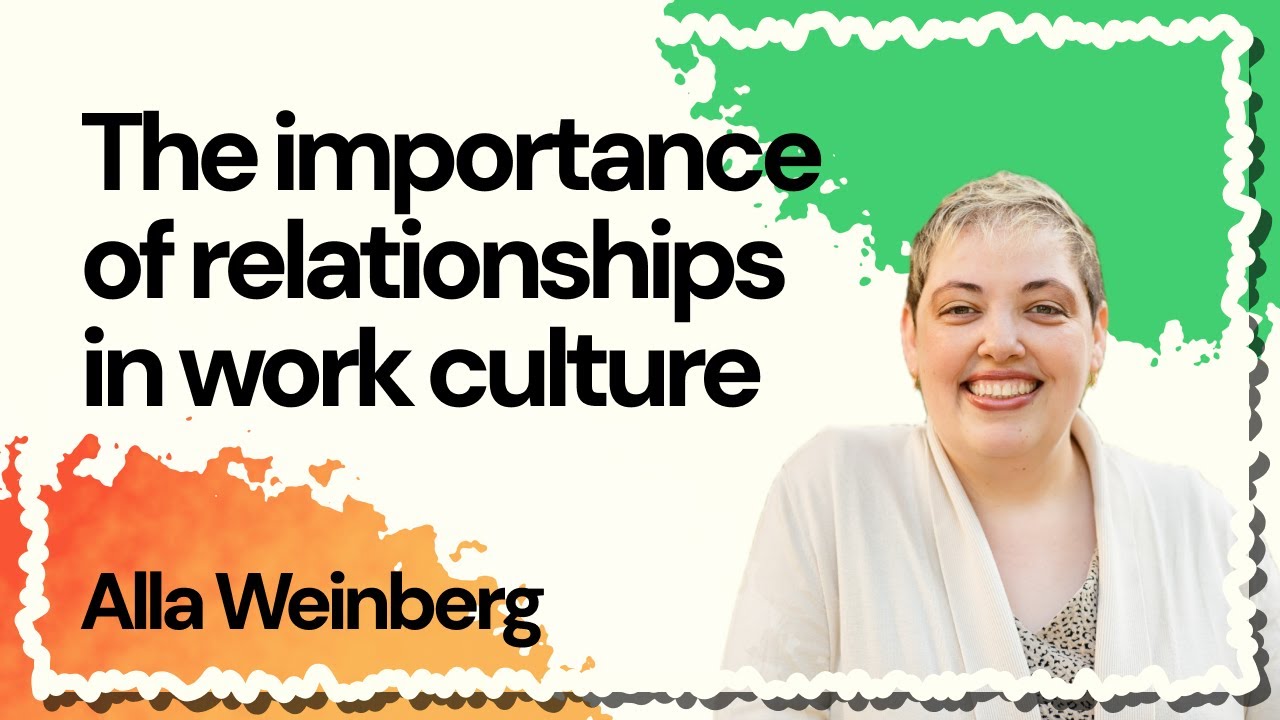
"The quality of our relationships is the only factor linked to how long we live — and how well we live."
*
Summary
*
In this episode, Alla Weinberg and I explore psychological safety, workplace culture, and why the quality of our relationships shapes not just how we work, but how we live. Alla shares her 20-year journey through the design industry — from information architecture to coaching — and the lived experiences that led her to write _A Culture of Safety_. We talk about toxic and "too nice" cultures, the pressure to "crank out" design, how unsafe environments shut down our ability to think, and what leaders can do to model honesty with kindness. We also look ahead to the AI era and why Alla is building a social health organisation to help people rebuild connection, community, and human-centered ways of working.
*
Guest
*
Alla Weinberg
Website
Four percent
LinkedIn
*
Host
Danny Hearn
Website
Podcast
*
(00:00) Alla Weinberg
studies have shown that the quality of our relationships is the only correlating factor, both to the how long we live and how well we live. they looked at diet, they looked at exercise, they looked at…
(00:11) Danny
Really?
(00:13) Alla Weinberg
like, you know, hobbies, looked at all these different dimensions and factors for human beings. ⁓ Researchers from Harvard did. And what they found was the only factor about our quality and the length of our life is the quality of our relationships.
(00:40) Danny
Allah. Thank you for coming on. I’m always excited when guests come on, but there’s something very compelling for me when I haven’t really met somebody before, as is the case, we haven’t really met, we just exchanged few messages on LinkedIn. But I have looked at a little bit of your work, and I caught you on a couple of podcasts, and I felt like you had a kind of interesting story to tell. And I wanted to
to sort of explore some of the topics that you’ve worked with. So maybe what I found worked quite well is if people could give your own introduction, because I will miss things out and say it wrong. But for people that aren’t familiar with your work and your journey, certainly I have seen you describe it as a twisty twirly journey. So would you help pick around this in a bit of your background so that people know?
(01:30) Alla Weinberg
Yes.
(01:36) Danny
who you are and what journey you’ve been on, just to give a sense.
(01:40) Alla Weinberg
Yes. So I’ve been in the design industry since 2005. So for 20 years now, I back then I started out as an information architect. That was the only title that was available. Moved into like usability specialist, you know, product designer, service designer. I went through all the, you know, all the changes in the industry that there were with related to design.
(01:55) Danny
Yeah.
(02:10) Alla Weinberg
⁓ early on in my career, about a decade ago, maybe a little bit more, maybe 12 years ago, I, ⁓ was feeling a little, I don’t know, restless with design, ⁓ with my career. And I was at a mid level by that point and I was feeling a little bit restless and I wasn’t sure if this is what I wanted to do long-term, if design is what I wanted to do long-term. And I hired a coach and I didn’t even know at that time, that coaches.
were a thing. I think I heard about it on another podcast that I was listening to at the time. And I hired a coach and realized, like I like this coaching thing. This sounds interesting. ⁓ And so I went and I got trained in and got certified in, it’s just general coaching, like just coaching skills, basically. And since then I’ve been doing, I’ve been coaching.
mostly designers and design teams, you know, how to work better together on relational skills, on career skills, and bringing it in, also bringing coaching skills into my design work, like with facilitation, workshop, experience, creating experiences for stakeholders, being able to create alignment. And then I moved into actually using my design skills in creating employee experiences and leadership.
programs internally within organizations. And during this time, I actually had my son and I gave birth and that was as a woman, when you give birth, it’s a very big, I don’t know if you notice this in your partner, but like, it’s a very big life change to give birth to a child. Like it’s not just you have another human being, you as a person, as an individual really go through a really gigantic.
(03:57) Danny
Yeah, definitely. Yeah.
Mm.
(04:06) Alla Weinberg
shift for yourself and your identity before you were not a mom and now you are. It’s a very big shift. And through that process, what I became aware of is that a lot of the organizations that I’ve been working with and design teams that I’ve been working within didn’t feel psychologically safe to me, even though they were
(04:11) Danny
Yeah.
Mm.
(04:35) Alla Weinberg
talking the talk and they said that they want to be, but that’s not what actually bore out in the day to day. Like it just didn’t feel safe to me. And I took my lived experience and I actually wrote a book about how to create, how to design cultures, teams, you know, of psychological safety and it’s called A Culture of Safety.
(04:53) Danny
you
Could I, thank you, that’s really helpful to ground it for people. I want to ask a question and I asked this with care, but I guess I’m really curious, you mentioned like from lived experience. So were there examples like in some of your design, some of those cultures you were in, where you had this, you first realised like what…
(05:00) Alla Weinberg
Yeah.
Yeah.
(05:24) Danny
What is this? What is this culture? Is it toxic? How did you first see those signals that you were in something that wasn’t safe? What happened for you?
(05:35) Alla Weinberg
I mean, even starting from the… Yeah.
(05:36) Danny
And I also start with care, so, you know, if whatever feels comfortable
to share.
(05:42) Alla Weinberg
I kind of, again, there was this process of giving birth to a new human being and everything sort of, I feel like reorienting inside of my body, inside of me. I was able to kind of get a little bit of a perspective on my history within the industry and even starting out as a junior information architect, as a designer at that time. ⁓ started, like initially didn’t seem…
toxic to me, just seemed normal. Like this is what corporate life is like. This is what a modern workplace is like. But upon reflection, I started to notice like very unhealthy things like, ⁓ know, things a lot of women experience a lot, which is, you know, if I offer an idea, it gets dismissed. If a man offers the idea, he doesn’t. But also I’ve had experiences where I would walk into a meeting and the men would be
huddled around looking at naked pictures of people, yes. ⁓ I mean, then they would like very quickly close their laptop when I walked in, but it was very uncomfortable in that sense. Also, there was a lot of, well, you can’t say certain, there were like meetings before the meetings where like, you can’t say certain things in this meeting, because that’s going to offend the boss’s boss. So we can’t say certain things.
(06:43) Danny
Really? Really? Wow. ⁓
Mmm.
Yeah.
(07:08) Alla Weinberg
⁓ we have to be very careful not to like, not to upset anyone. So there’s, so there were like limitations that were kind of, ⁓ editorializing of what you’re allowed to speak about, what topics you’re allowed to bring up. ⁓ that was very often the case. And, ⁓ also very, I think this may still be the case, but a lot of times as a designer, I was often pressured to just crank out designs so that to keep the devs busy.
(07:36) Danny
Yeah.
(07:38) Alla Weinberg
you know, yeah,
(07:38) Danny
Yeah. I’ve heard that so many times. That’s so familiar.
(07:44) Alla Weinberg
I mean, like, they’re like, well, we, know, we need, we need more stories. Like we need those designs, we have to keep the devs busy, but like without really taking in or giving me time to like really design or understand the end users and really test the designs or anything. It’s like, no, just crank it out. Right. And, um, and this is, think why
(08:04) Danny
What does that mean when
when when someone says crank it out? you know, like, what are they actually like this? Are they saying like, I’m trying to I’m trying to translate what they’re actually saying. They’re saying, ignore all your processes, ignore everything you’ve learned, come up with something that is sort of imagined, and, and it better be good. Is that what they’re really saying? I’m just trying to sort of
(08:17) Alla Weinberg
Yes.
Come up with some wireframes, give it to the devs. Yeah. Yeah. Right. That’s really what they’re
saying. Yes. They’re really saying we don’t really care about the process. We don’t actually care about our customers or end users in any way. ⁓ Just, you know, do your best, make it as usable as you can and give the wireframes to the devs as quickly as possible. And quicker would be better.
(08:46) Danny
That is, yeah, that is like,
feel for most people listening, I bet you they can relate with that. But I kind of feel like it needs to be said. For a designer, that is an extremely stressful thing to do. it’s sort of like, I don’t know, it’s a bit like saying to a translator, like, don’t really listen to what the person’s saying, just translate. On live TV or something, you know what mean?
(08:58) Alla Weinberg
It’s a very stressful thing to do. Yeah.
Right, right.
Yeah, yeah.
(09:14) Danny
You know, it’s quite a ⁓ pressure to put on to an individual, I would say.
(09:20) Alla Weinberg
And when
I would push back a little bit, like, well, we need to do some research or we need to at least usability test this or we need to get some feedback, right? Like any kind of feedback, anybody else’s eyes on it. ⁓ I literally, this is part of my toxic workplace experience. I literally would be pulled away into like a side meeting where they would, very like patronizing way would explain to me business and that I don’t understand business and this is part of business and we don’t have time for that design.
(09:26) Danny
Yeah.
(09:49) Alla Weinberg
Process nonsense, basically.
(09:53) Danny
And what’s really happening in that conversation, like coming back to this, like, are they really saying? Like, are they saying like, your, your needs don’t really matter here? What, like, what are they, what are they really saying?
(10:05) Alla Weinberg
Well, I think what
they’re saying is we really don’t value people over money, over profit. We don’t value people. We don’t value people’s opinions and yours included, mine included. That’s what they’re actually saying.
(10:16) Danny
Yeah, yeah,
yeah, yeah, yeah.
(10:21) Alla Weinberg
And even in the heyday where, I mean, think design now is really in a tough spot. even when I was coming up as a designer, where design was everywhere, from a business perspective, why design was supported at that time was because ⁓ firms like IDEO and Frog and those kinds of big firms were able to sell the case that design is what’s going to get you the profit that you want.
(10:50) Danny
Yeah.
Yeah.
(10:52) Alla Weinberg
And so still, wasn’t that the organization was customer centered. It never was. It was usually either product centered or ⁓ engineering centered or sales centered, depending on what the product was. And it wasn’t buying into human centeredness in general. It was like, ⁓ this is the means to the end of how to get more profit. And that’s why designers are often treated as like…
(11:05) Danny
Yes.
Yeah.
(11:20) Alla Weinberg
wireframe monkeys, I guess, like just get it done. And also why right now there’s been so many layoffs, because they’re like, we’ll just use AI to make the wireframes. Right? Or the designs or whatever. We’ll just have AI do it. So we don’t need the designers anymore.
(11:30) Danny
Yeah. Yeah.
It strikes
me that that’s a really I’m thinking a lot of of younger people and I’m thinking like that seems like a really good because I just feel like something that you need something I needed anyways, like orientation when I when when I arrive in a new job, there’s all the sales of that you go through in the in the job interview. And then you actually get in there. And then it’s like, ⁓ right.
(11:56) Alla Weinberg
Yeah.
bright.
(12:07) Danny
This is actually what the real job is. And there’s that orientation. And I heard you say it there, sort of like, whether it’s like sales led or product led or people led. And it’s like really understanding what does that actually mean? And what organization have I found myself in? Because I think, I imagine that for people that once you know that, even if you don’t like it, that was probably still helpful because you were able to translate the signals.
(12:34) Alla Weinberg
Yeah, because now you’re working
in reality, like, you know, in what’s actually happening in the organization versus what your hope is, is happening in the organization. And for a long time, the design industry, I think, has been hopeful that we can educate our way into the business valuing design, or we can champion it, we can evangelize it, we can provide enough decks to get a seat at the table.
(12:38) Danny
Right. Yes. Yes. Yes.
If they just
understood X, if they just understood Y, then that would move the needle and suddenly I’d be given a period to do the work properly. It’s that kind of thought, it?
(13:05) Alla Weinberg
Yeah, right.
Right.
Right.
That’s right. Right. Myself and even my, like, if I’m a, you know, a higher level, like myself and my team, like give, give us the, the resources that, you know, the investment, the time to be, to really be able to do it. And honestly, just very honestly, like that just, haven’t seen that pan out anywhere. I haven’t seen that pan out in the industry. It’s just a lot of effort for something that is not working and has not worked.
And especially now again with AI coming on board, organizations are really thinking like, they really have always thought of design as a cost center. And then they’re thinking, we can lower our costs there because AI can do it for us. We don’t need those designers anymore. I’m sorry to say, but I also just want to kind of couch it in really what’s happening in the industry right now.
(13:42) Danny
Yeah.
Yeah, 100%. I mean, I think this is the cold anxiety and sweeping feeling that I was having a conversation with somebody the other day that the design industry is effectively contracting right now. Like it’s in a pullback, it’s getting smaller. Teams are getting downsized, roles are getting, they have to do more for less. It’s that kind of thing. Coming into the kind of work that you’ve done,
This doesn’t sound psychologically very safe. This landscape that we’re painting right now, right?
(14:41) Alla Weinberg
Well, it hasn’t been, right? Right.
And I think, feel like it’s getting more unsafe now as we, as we continue, you like over the last three years or so, it’s been more and more unsafe, especially now even to the point where, you know, as designers, again, we don’t know, are we going to be replaced by AI tomorrow? Is that going to be the decision that’s going to come down?
(14:52) Danny
Mm. Mm. Mm.
Yeah. Yeah.
Yeah. What’s your relationship with that? Like, are you in a different place with the work that you do now? Like, do you feel insulated from this or are you right in the thick of it?
(15:14) Alla Weinberg
⁓ Well, I am doing different work now ⁓ because as I said, like I started design and then I went to coaching and then I kind of incorporated coaching in design. And now I’m ⁓ really working to like just apply my design skills to build an organization that helps with ⁓ creating better relationships between people. So I’m building what I’m calling a social health organization.
(15:22) Danny
Yeah.
(15:41) Alla Weinberg
And I want to elevate social health, which is the health of your relationships to the same level as physical health that we all have to take care of, right? Mental health that we all have to take care of and social health. Because studies have shown that the quality of our relationships is the only correlating factor, both to the how long we live and how well we live. they looked at diet, they looked at exercise, they looked at…
(16:06) Danny
Really?
(16:08) Alla Weinberg
like, you know, hobbies, looked at all these different dimensions and factors for human beings. ⁓ Researchers from Harvard did. And what they found was the only factor about our quality and the length of our life is the quality of our relationships. So that’s actually what I’m focusing on right now.
(16:27) Danny
Meanwhile, almost 99 % of the Western Hemisphere is focused on making money, not building relationships. Right?
(16:36) Alla Weinberg
Right. That’s right. It’s
like, this is me trying to stay sane in that.
(16:42) Danny
Yeah. Yeah.
Yeah. So tell me about this work. So what happens? what do you, are you asked by organisations to come in to help people think about relationships differently and build them? Is that how your work goes?
(16:57) Alla Weinberg
⁓ well,
they’re not asking yet, but what I’m trying to get them to understand is to get organizations to start thinking about it because especially as they move towards AI and downsize their teams, that has a real human impact on the relationships that I’ve built with my colleagues and across departments and across, especially if it’s a very big organization across different organizational units. And, ⁓ and so what I’m actually trying to do is.
(17:00) Danny
Yeah.
(17:25) Alla Weinberg
offer a social health assessment as the first step for people to understand like how are the relationships going on our team? could be like for a specific team or it can be cross departmentally, it can be at an organizational level because as we all know and seem to somehow forget and because I think there’s like also this very hyper individualized sort of perspective when it comes to work right now.
⁓ that you take care of your career and you get things done and you have your own individual performance. But it doesn’t make any sense because there’s nobody that gets any work done without other human beings. There’s nobody that lives in a bubble and is able to get any work, any kind of project, anything completed, anything built, anything shipped without other people. That’s not possible. And the quality of that work, of what gets built, what gets shipped,
(18:18) Danny
Hmm hmm hmm hmm hmm.
(18:24) Alla Weinberg
what gets designed, all of it is 100 % dependent on how well my relationships are going with those people that I’m working with. And if there’s not great, it’s going to be slow and it’s going to be hard. it’s kind of, you’re going to see it in the products that you create. And then, you know, the customers are going to be like, what is this? And this is how we’re getting in shitification everywhere. It’s just like, this is crap. Yeah, because AI designed it and there were no human relationships involved.
(18:34) Danny
Yeah.
I’ve been on, I was on a project last year and there were points where the designer didn’t want to confront the dev because it was a bit pokey between them. And because of that, certain like, like it wasn’t like the whole thing got degraded, but just like a little bit. Like there was like, well, you know, if they had had a better relationship between them.
it would have made the whole thing like a bit better and ⁓ that person was like, I’m not gonna ask about that. I’m not gonna ask about that because it was just like anxiety producing and you know, there was a poor dynamic between them and I could see that. it’s just that like something that I often notice with organizations like they don’t…
(19:24) Alla Weinberg
Yeah.
Yeah.
Exactly.
(19:47) Danny
not unless they’ve got very forward thinking HR person, like they don’t think of this as something that’s a thing. It’s like, no, we need like agile training. We need scrum coaches, we need, you know, like training, but it’s never like on the relationships. You know, it’s, yeah, I agree with you. I in every job I’ve been in, it’s probably been the number one enabler or disabler. Yeah. ⁓
(20:04) Alla Weinberg
Mm-hmm.
or just exactly, yeah.
(20:16) Danny
What do you think? For people that maybe just to make it kind of more real, what does what does sort of good relationships look like and mean in a culture? What would a culture that that is thriving on its strong relationships feel like? What would it like? How would you describe it?
(20:34) Alla Weinberg
Okay.
Well, that people actually spend time thinking about and reflecting on their relationships. okay, like, let’s just take the example that you provided. There was a designer that was not feeling, maybe feeling some tension with a developer, right? So in a healthy culture, that would be something that somebody could, like they could say to each other, like, hey, I’m feeling some tension here. something’s not working. Can we talk about that? Right?
(21:05) Danny
Yeah, yeah.
(21:07) Alla Weinberg
And have honestly have the skills to talk about that. ⁓ I feel a lot of us, again, grew up in this very extreme individualist in the Western hemisphere culture, very individualistic culture. And so not, we’re not ever modeled these skills of, how do I have these conversations about relationship? Not about the role that you’re playing or the work you’re doing. It’s not feedback, you know, it’s, it’s about how we feel about each other and how we’re behaving with each other. And.
Being able to ⁓ hear from somebody else like, hey, that thing that you did, it really upset me or it hurt my feelings. And being ⁓ able to say, take responsibility and say, I didn’t know that, I did hurt your feelings. Not, that wasn’t my intention. ⁓ you’re making too big a deal out of it, right? Like that’s often the response that people give, but actually be like,
(21:45) Danny
Mm. Yeah.
(22:06) Alla Weinberg
I don’t care if it wasn’t your attention, your impact was you upset somebody. And then you can say, yeah, I did upset you. Tell me more about that. What happened for you there? You know, like really slow down and like talk about it. Actually talk about your relationship.
(22:10) Danny
Yeah.
That’s, mean.
that for some people might be absolutely terrifying. What you’re suggesting. Right? You know, like, you know, to actually like when they think of that, there’ll be one person on the team that they just don’t gel with and the thought of having a conversation like that. Something that I shared with you ahead of the call was something that is a different language, but I think it fits with this is
(22:28) Alla Weinberg
Absolutely, yeah, 100 % it is. 100%, yeah. Yeah.
(22:52) Danny
the idea of transactional culture versus relational culture and how to spot it. And the one example that I often reflect on, I just started at an agency and I was allocated to go into a team. it’s in the remote era, so I get a link, click on the link. First call, haven’t met anybody, don’t know anyone’s name, barely know what the project’s about.
(22:56) Alla Weinberg
Mm-hmm. Mm-hmm.
(23:22) Danny
That’s cool. All cameras are off. My camera’s on, everyone’s off, which is always really interesting to me, cameras. I find it fascinating when everyone turns their cameras off. And then straight away, there’s a screen share of a spreadsheet that has a list of tasks in it. And it’s like, yeah, Danny, so you’re going to be doing this. We need this by next week. No, hello. No, this is so and so. I don’t even know what they look like. And then somebody else came in and then one of them was effing.
(23:44) Alla Weinberg
Right?
Right.
(23:51) Danny
dropping the f-bomb on this other person who was late. And that’s my first first 10 minutes. Now, I’ve been around the block a bit. So I just thought it was mildly amusing, shocking, and made me think I don’t want to work here. But I’m thinking like for someone who’s their first job, like I was just thinking, I’ll leave but for someone who’s first job like, as you had said earlier, like you just think maybe that’s what’s normal, you know, but like, that isn’t certainly not like
(24:07) Alla Weinberg
Right.
Right.
(24:20) Danny
I don’t think that’s normal and it’s not healthy. just a, just a sign post.
(24:23) Alla Weinberg
I feel like it’s like on the opposite
side of what I just described. Like that’s like completely opposite side of like, and then, and then I’m like, let’s talk about our relationship. And this is like, let’s not even introduce ourselves to each other. It’s, ⁓ I guess it’s honest. I mean, it is on a spectrum, right? Like there’s different levels of relating that happened in different organizations. ⁓ But even when you describe like that very transactional, like, okay, let’s get into the work. You’re the tasks, right?
(24:32) Danny
Yeah. Yeah. Yeah. Yeah. Yeah.
(24:52) Alla Weinberg
and we’re gonna check them off basically. And…
(24:54) Danny
Yeah, yeah. And I’m just there to
tick off a task that I’m there’s there’s no interest in me as a person that or what I’m good at or bad at absolutely no interest. It’s just this is the task and you execute.
(24:58) Alla Weinberg
Yeah.
That’s right.
Right. ⁓ I just feel like for junior, more junior designers or folks entering the field, like if they enter into this kind of environment, it feels very much lost at sea. Like I don’t, yes, I can do the tasks, but I don’t have the context around it. I don’t know how I, as an individual, can contribute the best to any of this. It really just feels like somebody threw me in and left me there.
(25:36) Danny
Yeah,
yeah, yeah.
(25:38) Alla Weinberg
And biologically, we are wired as social creatures. we are, like it’s biological. Like it’s in our bodies, it’s in our nervous systems, it’s in our brains, it’s how our bodies work. And like, know, babies that were given up, let’s say for adoption, weren’t like, they were fed and clothed, but weren’t nurtured, didn’t do well. Like they didn’t do well because we’re at the base of it, we’re social creatures.
(26:04) Danny
Social creatures. ⁓
(26:06) Alla Weinberg
And we
need connection as much as food and water and air. We literally cannot survive without it. This is why like a very transactional workforce or environment can actually be very traumatizing to people. And this is what I also talk about more recently. I’ve gotten another certification which is in ⁓ relational trauma coaching.
(26:10) Danny
Mm-mm.
Mm-hmm.
(26:32) Alla Weinberg
kind of deepened like my coaching experience around it, because I see so much of that in the workplace. And what people misunderstand trauma, they think it’s like, somebody going off to war and, you know, there’s violence and death and it’s a terrible thing, which some people do. There are soldiers, people do go off to war. That happens. But on a day-to-day basis, all that trauma is, is stress that is just too overwhelming for our bodies. Without the protection
of connection. it’s stress that like, like, let’s say for designers, it’s stress, just chronic stress, years and years of working within a transactional environment, very stressful for our bodies that again, need connection as much as they need food and water. We don’t have it at work at the place we spend the majority of our time and our life that we spend more time at work than we do with our families at home. Right?
(27:30) Danny
Yeah, yeah, yeah.
(27:32) Alla Weinberg
So over a period of time, and then add to that, maybe you’re a woman and your ideas are dismissed like I felt that they were, or you’re a person of color and you’re not being paid as much or given as opportunities as much as colleagues of other races. And you’re just gonna, like it compounds.
(27:54) Danny
It’s like losing our humanity, know? That’s what came to my head. It’s like, you know, if we’re stripping away the social cues and different little aspects, asking people how they are, and stripping it right back to your tasks, you know?
(27:56) Alla Weinberg
It is.
(28:15) Danny
it’s kind of like, what are we, what are we doing? There was something, he meant it in a different context, but it comes to mind as a previous guest, and he was talking about like, where we’re coming into an age where design is reduced to, you know, shuffling through juror tickets. And there’s something that just really, when I think of what you had just said, just like, if you take away, like, any kind of, you know,
(28:15) Alla Weinberg
Yeah.
Yeah.
(28:42) Danny
culture that is caring and you strip that down to this transactional thing and then you’re just shuffling through juror tickets. It’s it’s kind of, you can kind of see why AI could replace that, couldn’t you? Because it’s like, where’s the, where’s the humanity? Where’s the person in all of that? Like, what are we doing? Yeah.
(28:53) Alla Weinberg
Yeah, absolutely, absolutely.
Yeah, yeah,
I agree. And I think that, I don’t know, I guess at this stage, a lot of corporations are sort of headed in this direction, but it’s not sustainable. At the end, I really do think that that’s going to fall apart.
(29:14) Danny
No.
What do you think that people can do if you find themselves in these cultures? ⁓ For people that maybe are listening and they’re thinking like, I don’t think I’m in a very safe culture. Sometimes quitting isn’t necessarily an option. Like if you’ve got bills and the way the market is right now, like it’s not that easy to get another role.
(29:38) Alla Weinberg
Yeah.
(29:40) Danny
I’m just wondering, like, are there any things that you think people can do to if they don’t have someone like yourself coming in? What can they do?
(29:46) Alla Weinberg
yeah.
Well, I still would look for a job, a different job. I would still recommend that they look for one. I mean, don’t quit, but like look for one in the meantime. But also, and this is also for myself, like I want to reframe it, like I try to reframe it for myself even, but it’s like the job is there to support me financially and provide some stability in that sense. It’s not the place where I find connection. It’s not the place where I find meaning.
(29:54) Danny
Yeah, right. Okay, fair enough. Yeah.
(30:21) Alla Weinberg
And, but I still need that in my life. So where do, where can I go and find that elsewhere? So it’s, so it’s about maybe joining something in your local community or starting a community group, virtual or locally, ⁓ finding people that have similar interests than you. But it could also be even with colleagues, like, ⁓ forming a kind of an, an informal employee group, right? Like where you maybe just go out. You have like a.
(30:27) Danny
Yeah, yeah.
(30:50) Alla Weinberg
even virtually, like you can have like little Friday drinks together or something, right? Where ⁓ you the effort to get to know the people that you work with ⁓ and build relationships with them and build care with each other, rather than waiting for the organization to provide that for you or to have that culturally, which many do not, and they don’t want to invest in that.
(30:53) Danny
Yeah. Yeah.
Yeah, yeah.
I think something that resonates there for me, like I ⁓ had a job last year where I thought going in that my number one objective was to create a good outcome. And I mean that in terms of like good research. So that was my primary mission is to create good research. And so I didn’t invest in relationships. I didn’t… ⁓
make an effort to meet people, it’s all remote, but I didn’t make an effort to chat to anybody unless I was working directly with them. And then in that case, I would be in a largely transactional mode. And in some ways, I was like very effective, but I kind of peed off some people. And I think they found it. There was one person in particular who I think probably left with a of bad taste in their mouth. I think, I think
(32:04) Alla Weinberg
Mmm.
(32:13) Danny
It was largely just we didn’t really understand each other, you know, and I have some regrets around that. in, I took another job this year, and I took a really different tax to it, not knowing what the culture was, because I do contracting. So I don’t know what I’m to do. You know, you get these half an hour interviews, you’ve got no idea what it is. And something that I started to do is to put in 30 minutes with everyone on the team when I start.
(32:20) Alla Weinberg
Yeah.
Yeah, yeah.
Yeah.
(32:43) Danny
And I also send them, I send around a manual of me as well. And I’m quite vulnerable in that manual of me. I’ll put in a few things, things in it that are quite honest and, you know, fairly truthful. And it worked wonders, actually. Because I got to, I would just put a half an hour in and I’d say, hey, I don’t have any objective here other than to just say hello, get to know you. And I would just ask, firstly, like, you where do you live? You know?
(32:47) Alla Weinberg
Yeah.
Mmm.
(33:13) Danny
what’s what and try to not go into work. And then eventually, I would just say like, what can I do to work? Like, how can I help you get what you need to get done? Like, you know, there are things that I can keep in mind, even if I didn’t think I was going to work with him, I just ask anyway. And that was something that I have found to be really, really helpful. You know, that I didn’t need permission to do, you know, but I was just thinking about what you’re saying and
(33:13) Alla Weinberg
Right,
you
Yeah.
(33:42) Danny
Yeah, like how you can create those groups or those pockets of some kind of relationship, right? Because if you don’t invest in relationships, then, and the culture doesn’t do that by default, it’s not going to happen. Especially in remote.
(33:49) Alla Weinberg
Right.
It’s not going to happen. Yeah. And the excuse,
and the excuse I get people are like, well, I’m too busy. And I’m like, well, yes, but you would actually be able to get things done more effectively and efficiently if you had better working relationships with books.
(34:09) Danny
Yeah. Yeah.
Yeah. I mean, this must really affect people’s mental health. mean, did was there a time that you experienced that where you were just feeling like my mental health is just, you know, like, how did you gain this this perspective that you’ve got? Did you sort of have some reflection on some experiences and then think, I can’t work this way?
(34:16) Alla Weinberg
Absolutely.
Yes.
Well, my
mental health, yeah, well, my mental health really suffered when I was working, ⁓ like when I had managers with whom I didn’t have, like I didn’t feel really close, connected to, or that they cared for me or wanted the best for me. ⁓ And I remember there was a point where I was waking, like I was crying every night after work because I was just so miserable and I really got depressed. I felt a lot of depression. ⁓ got, I started to get physically sick more often.
(34:53) Danny
Yeah.
you
(35:00) Alla Weinberg
know, colds, flus, like those kinds of things, really didn’t want to go into, like at that point I was still going in, because it was pre-COVID, ⁓ and didn’t want to go into the office, you know, like really, really miserable around that. And ⁓ yeah, I mean, I I literally went to therapy because I was like, I need help. don’t know. Like, I can’t, I can’t actually function. Like I, it was very, very difficult to get up in the morning and feel motivated and do.
(35:27) Danny
Yeah.
(35:29) Alla Weinberg
any work. the thing that I felt the most with my manager was that they just felt like no matter what I did, wasn’t good enough and it wasn’t right. There was always this nitpicking of there’s something wrong with it. And I’m always happy to take feedback and improve things and iterate. And it wasn’t that. was just like, there was no way I could get to a right place.
(35:54) Danny
which is really like messy for your head. ⁓
(35:57) Alla Weinberg
It just really, yeah, exactly. Yeah.
Which is where also I like, when I was reflecting, was like, wow, that was so psychologically unsafe. Like there’s literally nothing I can do or say that is actually right or would be accepted. You know, like, and, I know a lot of people have like these similar kinds of relationships with their managers, right? Where they’re like, feel very scared of their managers, feel that their managers look down on them or kind of punch down a little bit. ⁓
(36:09) Danny
Wow. Yeah.
(36:27) Alla Weinberg
Don’t have their back don’t aren’t really championing them and trying to like, you know, bring them up in their career and so You know again for junior folks that may be listening or mid-career folks like your manager is really though Your relationship with your manager is really the the thing that’s going to be impacting your mental health ⁓ So you’re obviously your social health if it’s not a good relationship, but also your career because if if you’re
You know, if you’re feeling terrible every day, you’re getting depressed, your motivation’s waning. It’s just not good to play. You’re not going to grow at that point. You’re kind of getting smaller and contracted. You’re not growing as a designer, as a professional at that point.
(37:11) Danny
Yeah.
Did you say you said something like our abilities are operating IQ? I think I heard you say this it drops like 50 % if you don’t feel safe. Did I get that right?
(37:19) Alla Weinberg
Yeah. Yes. Yeah,
that’s correct. Yeah. So we literally can’t think when we don’t feel safe because ⁓ us feeling safe and this is in our nervous system. Feeling safe is not meaning you feel calm. It just means like, you know, if I have a feeling, if I have a thought, I can share it with you and I don’t feel like I’m going to get punished if I share it with you.
Um, but there’s no way I could have, like, I didn’t at that time feel like there was any way I could tell my boss, like, I can’t, I don’t feel like I can do anything right by you. Although all I ever really wished was to be able to be able to say that, like to have the space to be able to have that conversation. You know, like, or just to say like, this isn’t working for me. We really need to figure out a different way to work together. This isn’t feeling good to me.
(37:56) Danny
Yeah.
Yeah. Yeah.
Did you
not have that language or did you think that it just it wasn’t actually safe to say those things because it couldn’t?
(38:17) Alla Weinberg
Both, both. I didn’t have
the language. I was just feeling upset and I couldn’t quite get there as to what was upsetting me. And again, because when I’m not feeling safe, the executive functioning shuts down because we don’t need it right now. just need to run away. Biologically, we don’t need to analyze anything. When there’s a threat to our bodies, all we need to do is run away or fight the danger. That’s it.
(38:22) Danny
Yeah, you’re in the chair.
down.
you
(38:47) Alla Weinberg
So, yeah.
(38:47) Danny
I think I think I read you I think I heard you say something like the three there’s like three pillars that the physical, the emotional and the psychological safety like that’s those are the three like pillars that if they don’t they they that’s like prerequisites for a safe environment. Is that right? Yeah, and that’s that is that that is that how you operate when you’re thinking about
(38:58) Alla Weinberg
I think ecological, uh-huh.
Yeah.
Yes, yes, that’s correct. Yeah.
(39:15) Danny
how to improve a culture, you’re looking at those beats, if you like, is that right?
(39:17) Alla Weinberg
Yes. Yes.
Yes. But safety again for human beings is only created in relationship. So is it, am I physically safe with you? Meaning am I going to be harassed in any way? Am I going to be discriminated against in any way? Am I in danger of being fired for my job? Because that goes directly to my ability to support myself and you know, have shelter and food and physical, you know, physical needs.
(39:42) Danny
Yeah.
(39:45) Alla Weinberg
And emotional safety, can I in our relationship tell you like, hey, I’m really feeling criticized by you and this is really hurting me and I feel upset every night. This needs to change. Can I say those things to you? Right? Or do I have to like go to my therapist and try to do it by myself? You know? And psychological safety is, hey, I have an idea.
of like how we could do things differently or I noticed this process over here really isn’t working or I don’t think we should all be off all off camera as you were kind of saying, right? Like, and being able to say that to somebody and not being worried that they’re going to be like dismissive of you or ⁓ retaliate against you later for saying those things.
(40:21) Danny
Yeah. Yeah.
Yeah, I think those are some really good, like, think those like markers of like, if somebody is listening to this and just going, yes, yes, yes, yes, yes, then that’s probably a fairly good sign that things aren’t quite right where you are. You know? Yeah, that’s interesting. I’m curious, like, you know, I suppose I’m thinking, I’ve got something here that you said.
(40:51) Alla Weinberg
Yeah. Yeah.
(41:04) Danny
Yeah, well, okay. So this is something that I wrote that I wanted to put to you. So I’ve been in a culture that I found confusing, where they took a lot of pride in how nice they were to everybody. And it was like, oh, we’re a really nice team. And we all look after you like, they’ll message that a lot. But then I had some experiences in that team where
(41:13) Alla Weinberg
Boom.
(41:33) Danny
like we had a retro, for example, and some of the team was saying, this isn’t right, this isn’t right. And somebody messaged and said, I don’t think that was a very good retro because there was some new people in it and it doesn’t create a good impression. And I just thought that was so interesting. It’s like, right. So they think the retro is about making it kind of like, like theatre, you know, and that we shouldn’t really be airing stuff, you know, especially not if there’s new people and
(41:57) Alla Weinberg
Mm-hmm.
(42:02) Danny
we should maybe be like, think that it’s confusing when people when when everyone is nice. And I don’t mean to suggest that people should be toxic, but there has to be challenge doesn’t there you have to be able to, to have uncomfortable conversations like that. I feel like that’s, it’s not safe if it’s too nice.
(42:11) Alla Weinberg
that’s…
You have to be!
Well, if everybody’s nice then,
yeah, well if everybody’s nice then nobody’s honest. That’s what you get. And it is toxic because it’s toxic positivity. We’re gonna pretend that everything’s fine. And then there’s no learning from that. There is no, there’s no growth from that. Because if we’re not allowed to talk about things that aren’t working, how can you make anything better?
(42:27) Danny
Right.
Yeah.
Yeah, yeah, yeah, exactly. And what, does a team overcome that? Where they maybe are telling themselves that they’re being truthful and nice, but like, really, they’re not. How do they overcome something like that? Do you think?
(42:47) Alla Weinberg
Right?
In modern, in current, like modern companies, organizations, the only way to get to overcome that is the leader has to model a different way. The leader needs to say, okay, we can be honest with each other with kindness. It doesn’t mean we have to be nice and kind or different things. Right. And then the leader needs to show, this is what that looks like. Right. And they need to.
(43:22) Danny
Yeah.
yeah yeah
(43:34) Alla Weinberg
And they need to show, actually say something honest with kindness, right? And then invite
(43:35) Danny
model it yeah yeah yeah yeah yeah
(43:41) Alla Weinberg
others and the leader can say, mean, preferably the leader will say, I’m not very good at this myself. Cause we’ve been operating in this other way for a really long time. Let’s all practice together how to be honest and kind at the same time and knowing we’re going to mess up and we’ll apologize to each other around that.
But what we want to do is build that muscle and build that strength to do that.
(44:08) Danny
Because
they’ve learned to be like that’s what someone said to me once. like, it’s like how, how, what, what, how, why did they learn to be like that? You know, like, obviously some people have just picked it up from what was there and are just mirroring what they see. But at some point, a certain homogeneity of, of, the group have, have learned that this is the language we use in this project and this, this team and.
(44:11) Alla Weinberg
Yes.
Mm-hmm.
Yeah.
(44:35) Danny
that’s where the safety begins and ends. And that might be because it was modeled. Yeah.
(44:39) Alla Weinberg
That’s right. But also it’s reinforced because
you said like, after that meeting, there was a note that went around like, that wasn’t good. Well, so then what behavior are you reinforcing right now? Right.
(44:49) Danny
That was like a change agent. Yeah, and that’s like a that’s like an anti change agent, like trying to course correct
it. Because, you know, something kind of went out of the pattern. And it’s like, no, no, no, no, come back. You’re breaking, you’re breaking the culture that we had. And I’m trying to bring it back. I I find this fascinating.
(45:03) Alla Weinberg
Right.
That’s right. And that’s,
and you get that reinforcement loop, right? So you’re like, ⁓ I’m not allowed to say those things. I’m not allowed to point to things that are not going well. So I’m going to sweep that under the rug. But eventually actually from a bit, very much of a business perspective that does come back to the business in the form of less profits, because you’re not listening to things that need, to the customers around things that need to be changed. There may be real issues with the product in some way that people are ignoring.
(45:20) Danny
Yeah.
(45:39) Alla Weinberg
and pretending it’s not there, you know? And it could be really causing serious business issues, but we’re not allowed to talk about it.
(45:46) Danny
Yeah.
How have we found ourselves in this state? It’s madness. What do you… I know. So the only thing I can do is laugh about it. You know how I survive some of these cultures is I find allies. That’s what I do because you’re reminding me. Having a laugh with you now is reminding me of what I do in those cultures is that I find someone that I can just kind of go, come here.
(46:07) Alla Weinberg
That’s right. That’s what I’m saying. Exactly.
(46:18) Danny
Am I just going crazy? I’m not crazy. This is mad. You know, and then that can be really cathartic is to find someone who you know can kind of read what’s happening and can kind of go, you’re not going crazy. This is mad. And that I found supportive. So
(46:19) Alla Weinberg
This is absurd, right? Like, right.
Yes.
Bye.
This is, yeah. Exactly.
And that’s why I was saying like, find that group of folks internally, you know, like get together, have some venting sessions. Be like, validate each other. Like, I mean, you’re seeing this too, right? Yeah, yeah, yeah, I am. Okay. Yeah.
(46:49) Danny
Yeah. Yeah, yeah, yeah, yeah, totally, totally.
So I’m wondering, just thinking about looking ahead now, you know, we talked a bit there in the era of AI, and what it might mean for work, like, what’s your perspective of, of, like, the way things are going in the future? Like, how, what, how do you think it’s gonna go? And do you do? What’s in your crystal ball? What can we expect for
(47:03) Alla Weinberg
Yeah.
I
(47:17) Danny
relationships and… No.
(47:18) Alla Weinberg
don’t have a crystal ball. guess I just feel that…
The trend that I’m seeing is like even more chipping away at our humanity, especially at work and how we’re working together. And so that’s why I’m working on the concept of social health and creating ⁓ basically training, coaching, community around our relationships and the skills that people don’t have around that ⁓ as an answer to that. Cause that’s what I’m seeing is happening. That’s like a consistent eroding.
of our humanity ⁓ to an extreme right now. And it’s just, it’s going to continue for a while until I think like it bursts basically. And so, so I want to give people the skills, the access, the community, the connection that is being chipped away at. that’s kind of where, that’s why I’m going in this direction. That’s my answer to it. I want to live in a different world than that. I don’t want to live in that.
(48:20) Danny
Mm-hmm.
(48:26) Alla Weinberg
It’s not, it’s literally not made for human beings and how, and the biology and neurology and physiology of human beings. No. And, and what I’ve reminded myself of, and I love for listeners to, like, grab this, take this as your own is all of this, how we work together, what we’re doing, how much time you spend working all of it was somebody’s idea.
(48:26) Danny
Yeah.
sustainable is it?
(48:54) Alla Weinberg
we can come up with other ideas of how to do that.
(48:59) Danny
I think that is an excellent point to end on. That’s yeah, I just like I want to add more to it. I’m like, no, that’s perfect. Yeah. Yeah. Thank you. Yeah, brilliant. Brilliant. Thank you. I’ve really enjoyed. I’ve really enjoyed the conversation. And yeah, thanks for
(49:04) Alla Weinberg
And that’s my invitation. That’s my invitation.
How else could it be? Yes.
Thank you.
Me too.
(49:22) Danny
exploring this with me and yeah, thank you. Thank you for coming and thanks for yeah having a concert
(49:28) Alla Weinberg
My pleasure.
Thank you so much for having me.